


Most productivity advice sounds good on paper.
Much of it feels reasonable.
However, a surprising amount of it is wrong, or at least incomplete.
Over the years, I’ve noticed that the biggest productivity gains sometimes don’t come from new tools or fancy systems, but from unlearning myths I have blindly accepted.
Here are the ones that matter most.
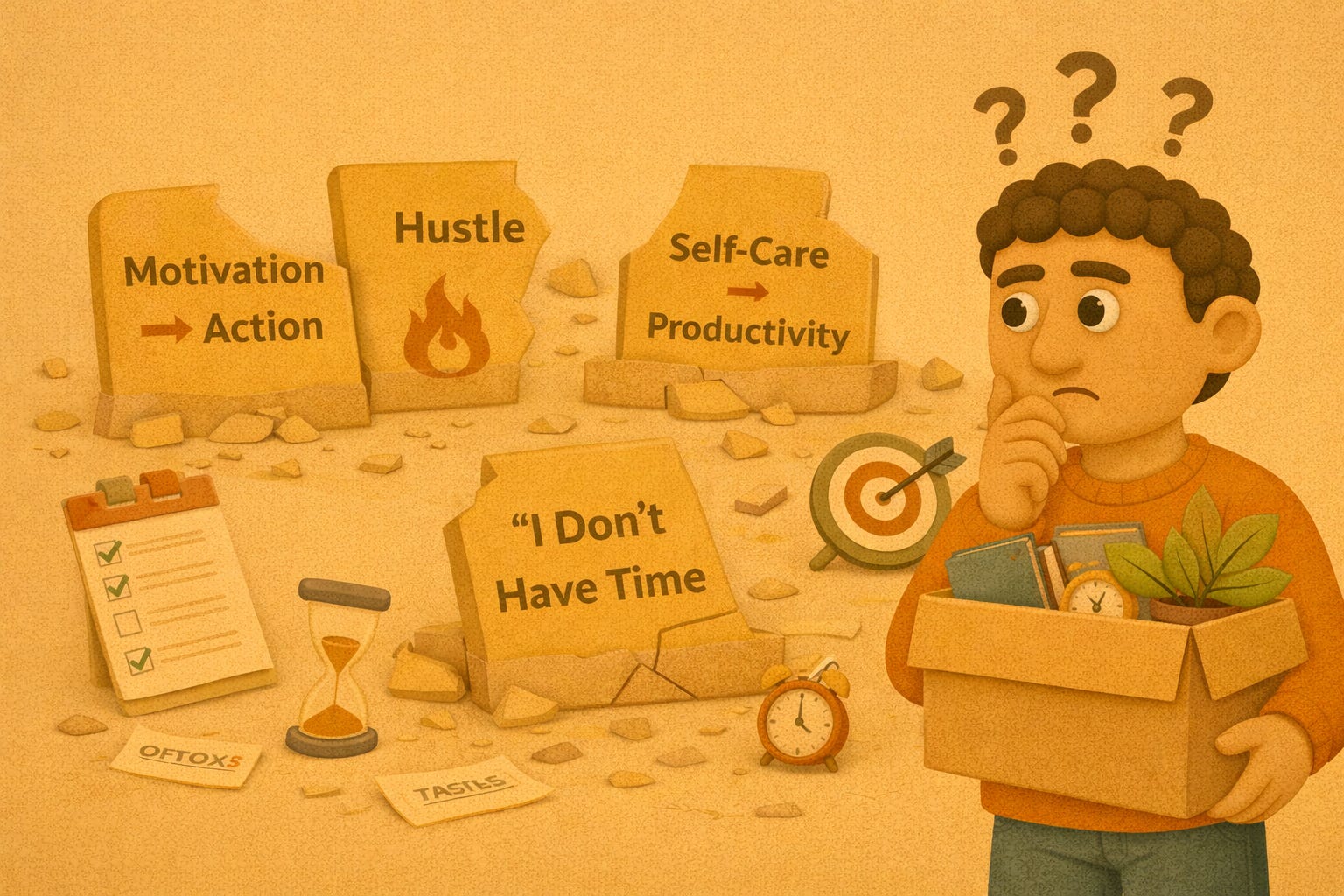
Myth #1: Motivation leads to action
It’s actually the other way around.
Motivation is not a prerequisite. It’s a byproduct.
Small actions create small wins.
Small wins create momentum.
Momentum creates motivation.
Waiting to feel like it is the fastest way to stay stuck. Because motivation itself just comes and goes. You can’t rely on it.
Myth #2: Hustle culture is always bad
Burnout culture is bad.
Hard work isn’t.
If your goal is extraordinary, don’t get there by accident or with four casual hours per week.
Almost everyone who’s built something meaningful went through a period of intense effort first, then optimized for balance later.
The key question isn’t “Is hustle good or bad?”
I think the better question is:
What is my goal, and does my effort match it?
Myth #3: Productivity and self-care are opposites
They’re often the same thing.
Sometimes the most caring thing you can do for yourself is:
finishing the task
submitting the work
meeting the deadline
Avoiding responsibility in the name of “self-care” often just delays stress—and multiplies it.
Personally, I feel like anxiety usually fades after having spent some good effort on a problem or task, and then in turn makes me feel better.
Real self-care reduces future pain.

Myth #4: Vague goals are enough
Abstract goals are fine, but incomplete.
Two upgrades matter:
1. Proximal goals
Goals closer in time create more motivation than distant, abstract ones.
“Lose 40 lbs by the end of the year” beats “Get a six-pack”
2. Intrinsic goals
Goals based on growth, skill, or contribution outperform external scorecards.
You control effort and learning.
You don’t control markets or algorithms.
Myth #5: You can do everything if you’re productive enough
You can’t.
Your to-do list will always be infinite.
Accepting finitude is freeing.
Once you admit you can only do three meaningful things today, the noise fades. And your focus sharpens.
Myth #6: “I don’t have time”
You do.
You’re choosing something else.
Having time is just a matter of priority.
Reframing matters:
“This isn’t a priority right now.”
That single sentence restores autonomy and makes you more likely to pursue your goals.

Myth #7: Productivity is about doing more
I would say it’s about doing more of the right things.
I like this equation:
Productivity = (Meaningful Output ÷ Time)
Speed without direction is useless.
What matters is how much of your desired outcomes you are able to achieve in what timeframe.
Myth #8: You need large blocks of time to do good work
You don’t.
Waiting for perfect conditions is how projects die.
Even allocating small slices of your time to a goal can produce meaningful output, especially when done consistently.
Also, in addition you will realize how often those “five minutes only” turn into muc more.
Myth #9: Your environment must be perfect
Helpful? Yes.
Required? No.
Candles, desk setups, morning routines: they’re preferences, not prerequisites.
The fewer conditions you need to start, the more you’ll actually finish.
Myth #10: Small optimizations don’t matter
They do.
When they reduce friction everywhere.
Typing faster.
Keyboard shortcuts.
System defaults.
When the gap between thinking and executing shrinks, output rises quietly but relentlessly.
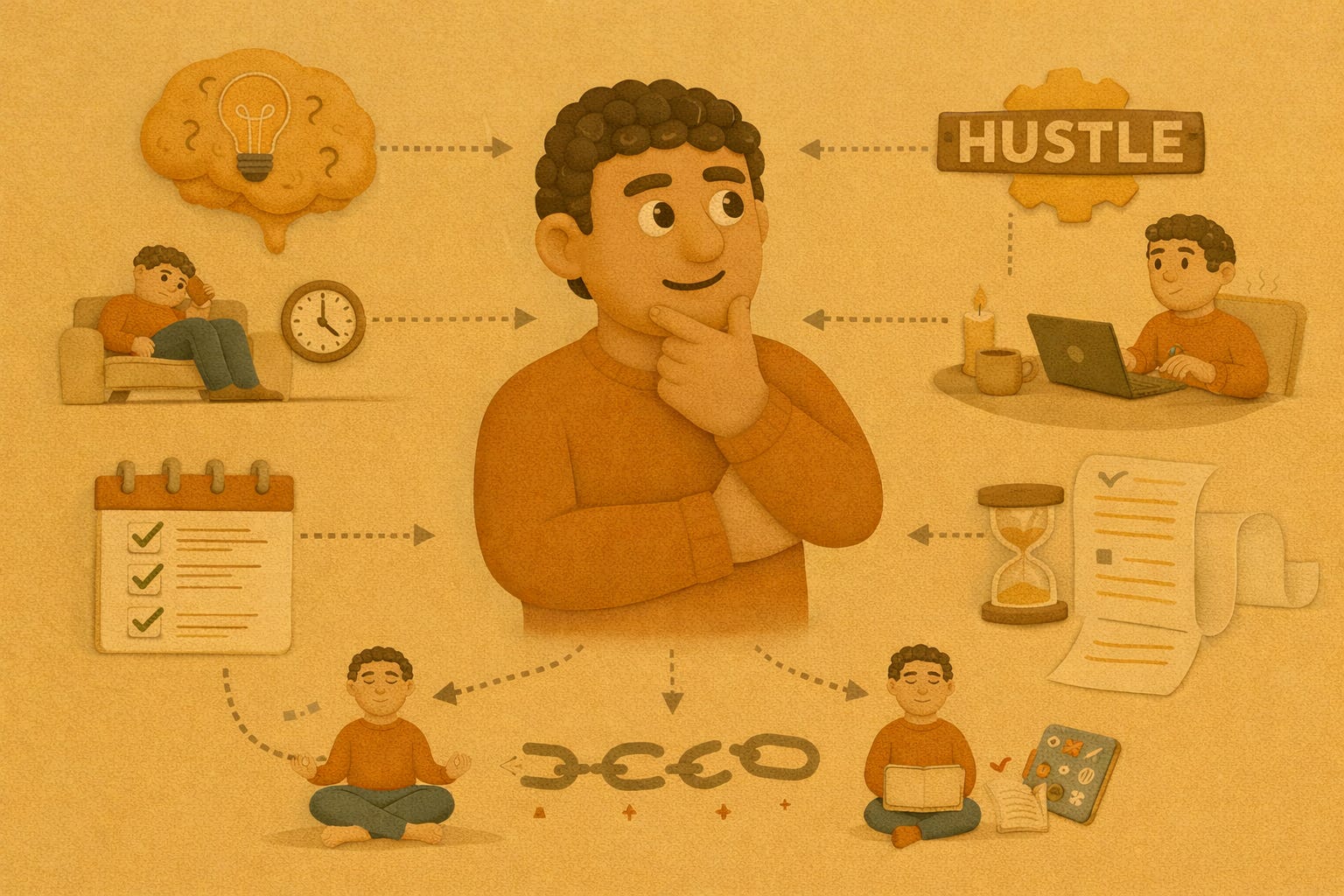
Myth #11: Reading many books is useless
It depends why you’re reading.
Two modes:
Exploration → breadth, context, curiosity
Exploitation → depth, application, action
Skimming widely to explore is valuable, but I’d argue that slowing down to apply is essential.
Confusing the two is the mistake, not reading a lot.
The bottom line
Most productivity myths actually fail for the same reason:
They turn flexible tools into rigid rules.New ideas, once a week, in your inbox ✨
Real productivity is contextual. It’s not perfect. It’s human.
It’s less about hacks, and more about choosing better stories to tell yourself about effort, time, and progress.
And once you get those stories right, the output takes care of itself.
Thanks for reading!
See you next week
— Tobi
Great re-frame on these, especially on the self care & hustle culture points!
I enjoyed reading this!