


According to my WHOOP, my biological age is currently 18.8 years old.
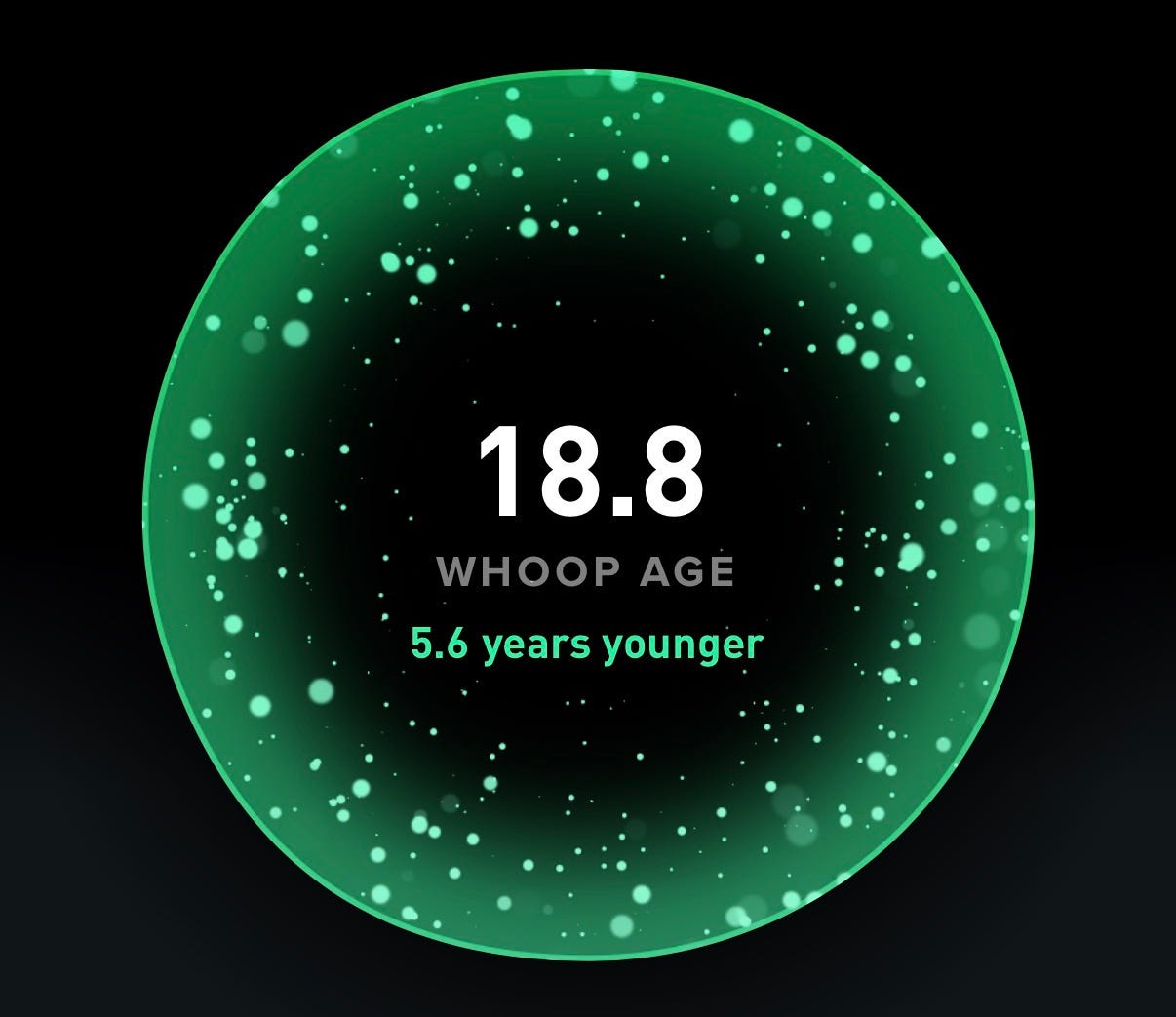
It also estimates my pace of aging at 0.0x, which would technically mean I’m not aging at all.
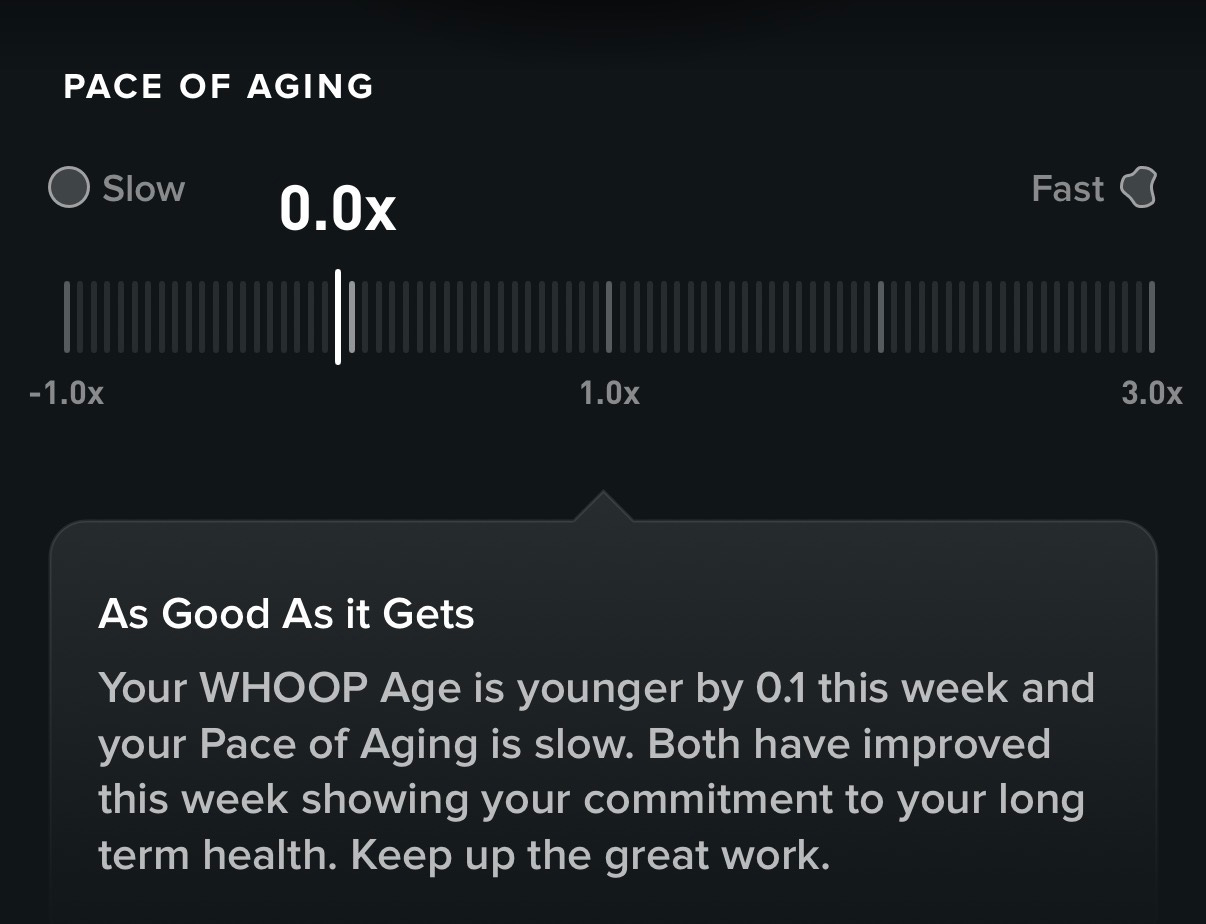
That is obviously not literally true.
Biological age scores from wearables are estimates, not perfect measurements of how old your body really is. But they can still be useful. They combine several health and fitness metrics into a simple number that shows whether your current lifestyle is moving you in the right direction.
And according to the data, mine is.
I have tracked my health using blood tests, Oura, WHOOP, and other measurements for almost five years. Over that time, I’ve watched my resting heart rate decrease, my cardiovascular fitness improve, and my recovery become more consistent.
For most of my life, I never thought deeply about health.
I didn’t deliberately structure my life around longevity. Sleep was something that happened at the end of the day. Nutrition was mostly about what tasted good. Cardio was something I knew I should probably do more of.
That changed over the last few years.
Health gradually became one of my highest priorities. And that’s not because I became obsessed with living forever, but because better health improves almost everything else: energy, focus, mood, confidence, performance, and quality of life.
The biological-age score is simply one reflection of that.
Here are the habits that have made the biggest difference for me.
What Biological Age Actually Measures
Your chronological age is simple: it is the number of years since you were born.
Your biological age tries to estimate how quickly your body is aging based on your current health and physical condition.
WHOOP’s Healthspan feature uses factors such as:
VO₂ max
Resting heart rate
Sleep consistency
Lean body mass
Activity levels
Strength and fitness indicators
The exact number should not be treated as a medical diagnosis. It is better understood as a health score.
A lower biological age does not mean you have discovered the fountain of youth. It means your current biomarkers resemble those usually found in a younger or healthier person.
The real goal is also not to win a wearable leaderboard, but rather to improve the underlying metrics.
And most of those metrics respond to the same basic principles.
1. Treat Sleep as the Foundation
I have been slightly obsessed with sleep for several years.
And I still believe it is the number-one health lever most people could improve.
Sleep affects almost everything else you are trying to optimize:
Exercise performance
Hunger and appetite
Blood sugar regulation
Hormonal health
Mental clarity
Emotional stability
Physical recovery
When you sleep badly, every other healthy behavior becomes harder.
You crave more calorie-dense food. You have less motivation to train. Your body recovers more slowly. Your stress tolerance drops. Even simple decisions require more effort.
Good sleep has the opposite effect. It makes the rest of your health system easier to maintain.
I have already written a full article about improving sleep here, so I will keep the practical advice simple:
Aim for at least seven to eight hours.
Try to sleep and wake at consistent times.
Keep your bedroom dark, quiet, and cool.
Avoid eating large meals shortly before bed.
Reduce bright light and stimulation late at night.
There is no expensive supplement or futuristic device required. But if your sleep is inconsistent, optimizing smaller details will produce limited results.
2. Build a High Level of Everyday Movement
Exercise is the next major lever.
Personally, I lift weights around three to five times per week. I also spend roughly ten hours per week in lower and moderate heart-rate zones.
Most of that is not structured cardio.
It comes from walking, hiking, swimming, volleyball, outdoor activities, and simply moving throughout the day.
Many people think exercise only counts when they are wearing gym clothes, following a program, and suffering through a dedicated workout.
But your body does not care whether the movement came from a treadmill or a hike with friends.
It all counts.
Formal workouts are important, but they only occupy a small percentage of your week. Your general activity level fills the rest.
That is why I place so much value on walking.
On a bad day, I still try to reach around 10,000 steps. My average over the last few months has consistently been closer to 15,000, often way over that.
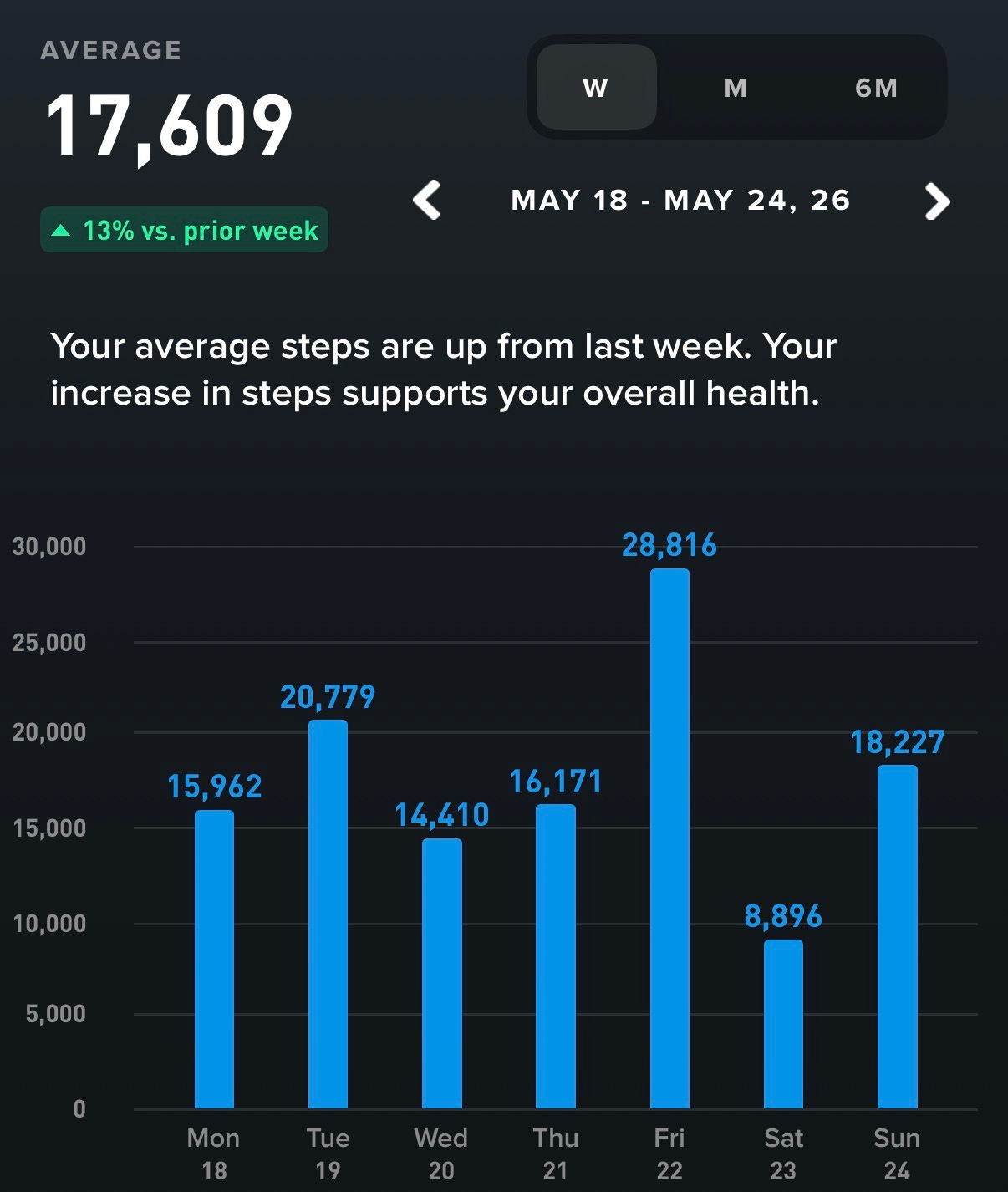
You do not need to hit an arbitrary number every single day. The goal is to keep your average high.
Walking is one of the most underrated health habits because it is:
Easy to recover from
Accessible to almost everyone
Compatible with work and social activities
Effective for increasing energy expenditure
Helpful for cardiovascular and metabolic health
I also won’t get into the details here, but if it interests you, here is another blog article I wrote about how to get more steps in every day.
3. Prioritize Protein and Control Total Calories
Nutrition can become unnecessarily complicated.
People debate meal timing, fasting windows, individual ingredients, artificial sweeteners, seed oils, carbohydrates, and hundreds of different supplements.
But most people would improve their diet significantly by focusing on two priorities:
Eat enough protein.
Avoid consistently overeating calories.
Protein is not a miracle macronutrient. But it makes almost everything else easier.
It supports muscle growth and maintenance, especially when combined with resistance training. It also tends to be highly satiating, which makes controlling total calorie intake easier.
When your meals contain a meaningful amount of protein, you are less likely to spend the rest of the day constantly hungry.
And when you are less hungry, you have less room to overeat highly processed foods, sugar, and empty calories. Thus you will almost automatically improve your body composition.
A healthier body composition improves many of the biomarkers associated with long-term health.
From there, you can improve the details.
Eat a varied diet. Base most meals around whole or minimally processed foods. Include fruits, vegetables, healthy fats, and sufficient fiber.
But do not make perfection the goal.
I probably eat well around 80% of the time, but I still eat dessert some times. I go to restaurants. I travel. I drink occasionally. Sometimes I overeat.
The difference is that I notice when it happens.
If I eat far more than usual for a day or two, I naturally regulate my intake afterward. I do not punish myself or follow an extreme detox. I simply return to my normal routine.
4. Use the Sauna Regularly
I recently returned from an exchange semester in Helsinki.
Unsurprisingly, Finland turned me into a sauna enthusiast.
Before moving there, sauna was an occasional wellness activity. In Helsinki, it became part of my weekly routine.
And over time, I noticed improvements in my cardiovascular and recovery data.
A sauna exposes your body to heat stress. Your heart rate increases, blood vessels dilate, and your body works to cool itself through sweating.
In that sense, sauna use creates some of the same acute responses as exercise.
And people who currently exercise very little may notice especially significant benefits because the heat still places a manageable demand on the cardiovascular system.
Use sauna as an extra layer though, not as an excuse to avoid moving.
5. Limit Alcohol Before It Disrupts Everything Else
Alcohol is worth mentioning because its damage goes beyond the calories in the drink.
It makes most other healthy behaviors harder, too.
Over the last six months in Helsinki, I certainly drank more than I normally would. That was part of the social experience, and I do not regret it.
But I can also see the impact in my data.
Alcohol does not need to be banned completely. The important thing is to be honest about the trade-off. If you drink occasionally and deliberately, it probably will not destroy your health.
If drinking becomes a frequent default however, it starts weakening the entire system supporting your health:
One bad night becomes bad sleep. Bad sleep becomes a skipped workout.
The skipped workout becomes low movement and poor food choices.
One decision creates several others.
That is why reducing alcohol often produces benefits far beyond alcohol itself.
6. Keep Stress Low Enough to Recover
Stress is not always bad.
Exercise is stress. Learning is stress. Taking on difficult projects is stress. Short periods of pressure can help you grow.
The problem is remaining in that state without recovering.
Your body needs periods of activation and periods of rest.
This is another reason sleep, walking, social connection, outdoor activity, and sauna can be so useful. They help move you out of constant stimulation and into recovery.
I actually think you do not need a completely stress-free life. That would probably be boring and unproductive.
But you need the capacity to handle stress, followed by enough recovery to adapt to it.
Stop Optimizing the Final 5%
Health content online tends to focus on extremes, like complicated supplement stacks, ice baths, CGMs, highly specific training programs etc…
But they are the final 5%. The first 95% is much less exciting:
Sleep enough.
Move every day.
Lift weights.
Train your heart.
Eat enough protein.
Control your calorie intake.
Limit alcohol.
Manage stress.
Repeat for years.
Most people do not really need another health hack, but rather they need to become more consistent with the principles they already know.
The Bottom Line
My biological age of 18.8 is not the result of one supplement, workout, or secret routine.
It is the combined result of hundreds of relatively boring decisions.
Going to bed early.
Walking instead of taking the car.
Choosing a protein-heavy meal.
Lifting weights even when the session is not perfect.
Drinking less often.
Using the sauna consistently.
Returning to the routine after falling off.
Do not start with the complicated details.
Build the foundation first.
Then keep it long enough for the results to become visible.
Because the goal is not merely to achieve a lower number on a dashboard.
The goal is to remain capable, energetic, and healthy for as much of your life as possible.
Thanks for reading.
See you next Saturday.
— Tobi
💡 Question: What are some things you applied to improve your health?
I do all of these, but 4 and 6 I am weak in. Need to do more there
Anybody considering buying an e-bike needs to re-consider. Your body needs regular maintenance. You can spend time getting demanding exercise, or you can spend even more time sitting in the waiting room of a doctor's office.