


If you ask the average person how to learn a new language, you’ll usually hear the same advice:
“Practice speaking.”
“Memorize conjugation rules.”
“Do lots of grammar drills.”
It sounds logical. It also happens to be wrong.
In this post, I will go into why it is wrong, while showing you the mechanism that actually drives language acquisition.
I’ve built up a lot of experience here, since Japanese is the fourth language I’m learning after German, Italian, and English. And this time, with Japanese I’ve approached language learning in a really structured, research-driven way by studying language acquisition theory.
I truly believe that by applying these principles, language learning becomes 10x more effective. It will also explain why so many people grind for years and still can’t hold a simple conversation.
The bold truth: You don’t learn languages by speaking. You learn them by understanding messages.
That’s the core of Stephen Krashen’s research on language acquisition — decades of study, countless experiments, all pointing to one simple mechanism:
Humans acquire language only when they receive messages they understand — “comprehensible input.”
Not through memorization.
Not through grammar drills.
Not through speaking practice.
Understanding → Acquisition.
Everything else is optional or supportive.
Here are the key insights this unlocks:
1. Your brain is a pattern-recognition machine, not a grammar computer
Think about how you learned your mother tongue.
Did anyone hand you grammar worksheets at age two? Did you drill conjugations? Did your parents give you flashcards?
Obviously not.
You learned because you were surrounded by messages you could understand. Your brain extracted patterns automatically:
– Word order
– Meaning from context
– Pronunciation
– Grammar rules (without ever being taught them explicitly)
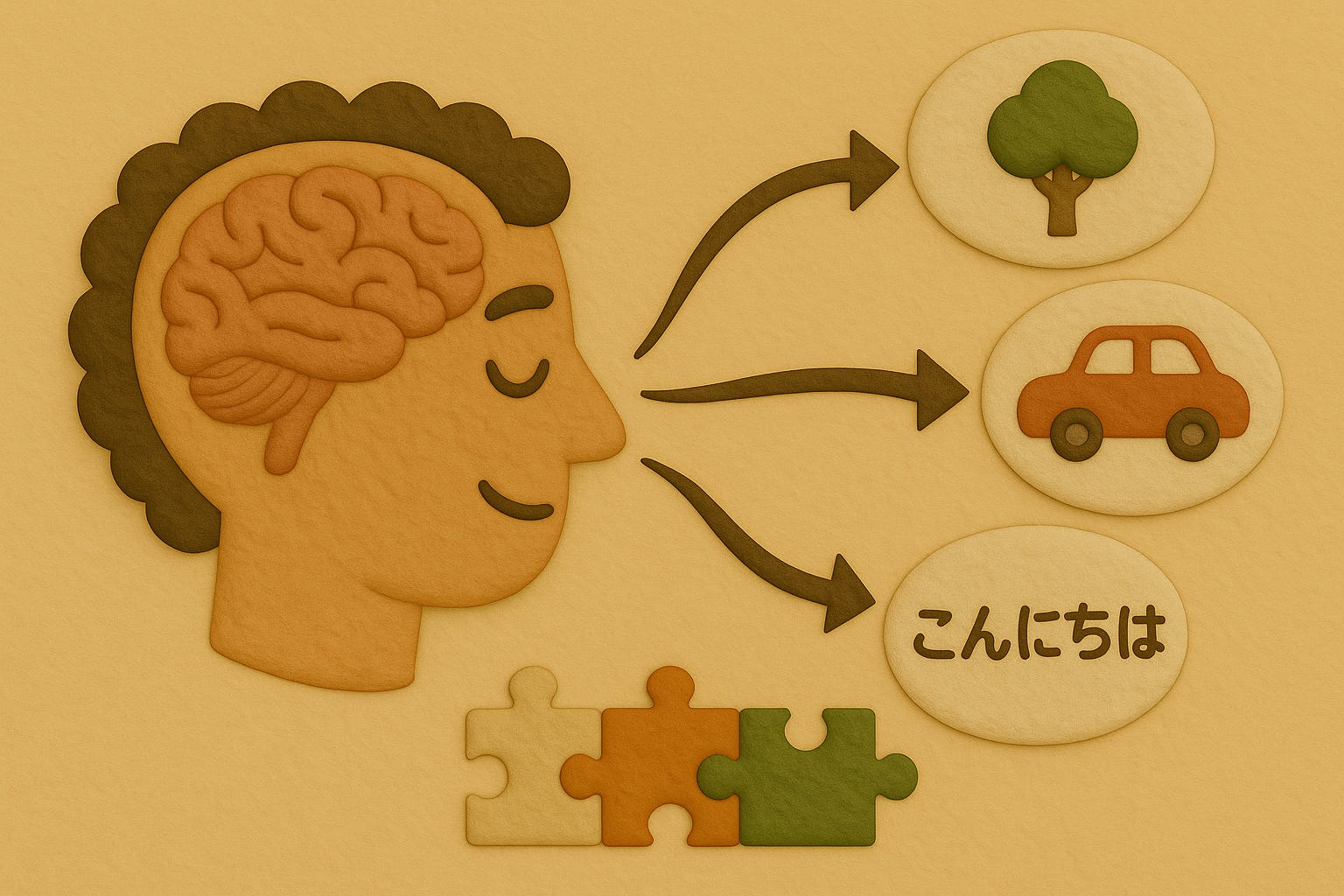
For example, English speakers know “the big red ball” sounds natural and “the red big ball” doesn’t. Almost no one can explain the rule. But they know it.
Why?
Because input created intuition.
Once you see that, traditional language learning looks a bit… backwards.
2. Speaking doesn’t cause learning — it reveals learning
This idea alone pisses off half the language-learning world.
But it’s true.
Speaking is output. Output is a byproduct of acquisition, not the cause of it.
Krashen’s research found:
– Speaking doesn’t build mental representations of a language.
– Speaking doesn’t improve grammar acquisition.
– Speaking only improves when comprehension improves.
This matches real-world experience.
When I started learning Japanese in April, I spent six months doing zero speaking. Not one conversation. No voice chats. No tutors. Nothing.
Just input + structured vocabulary building to make that input comprehensible.
Then I went to Japan.
And suddenly… Japanese came out. Naturally. Automatically. Without freezing. Without thinking about grammar. Without fear.
People even complimented my pronunciation.
Not because I practiced speaking — but because I’d built a huge reservoir of patterns through input.
3. Grammar drills give you knowledge — but not ability
You can study grammar rules for 500 hours and still fail to understand native speakers talking at a normal pace.
Grammar knowledge is like knowing the physics of swimming.
Input is like being thrown into the pool with a float.
Only one actually makes you a swimmer.
Grammar isn’t useless: it helps notice patterns in the input. But you cannot build fluency from grammar rules alone.
4. Active study is useful — but only to boost your input
Active learning can be extremely helpful, but only when used correctly.
Flashcards.
Vocabulary lists.
Basic grammar explanations.
Their purpose is simple:
Give you enough vocabulary and understanding so that native input becomes comprehensible.
Especially for hard languages like Japanese, learning 1,000–2,000 words early accelerates everything else.
But the real acquisition happens from:
– Native TV shows
– Books
– YouTube
– Podcasts
– Conversations
– Slice-of-life content
– Immersion with things you enjoy

A personal example
I grew up learning English mainly through input: YouTube, TV shows, movies, books.
School didn’t make me fluent.
The internet did.
Hours and hours of meaningful, interesting input. That’s what gave me—and millions of other Europeans—native-like intuition in English, even without living abroad.
This alone should make us question why we treat every other language differently.
5. You must learn to be comfortable not understanding everything
Beginners often pause every three seconds to look up a word.
That kills the entire mechanism.
Input only works when it flows.
You should understand enough to follow what’s happening — not every single sentence.
Your job is to tolerate ambiguity.
The more input you consume, even imperfectly, the faster the fog lifts.
Takeaways
– You acquire language through input, not by speaking.
– Your brain builds intuition from patterns, not rules.
– Speaking emerges naturally when comprehension is strong.
– Grammar helps noticing, not acquiring.
– Active study is a help, not the main driver.
– Comprehensible input is the engine.
– Embrace ambiguity and keep the input flowing.
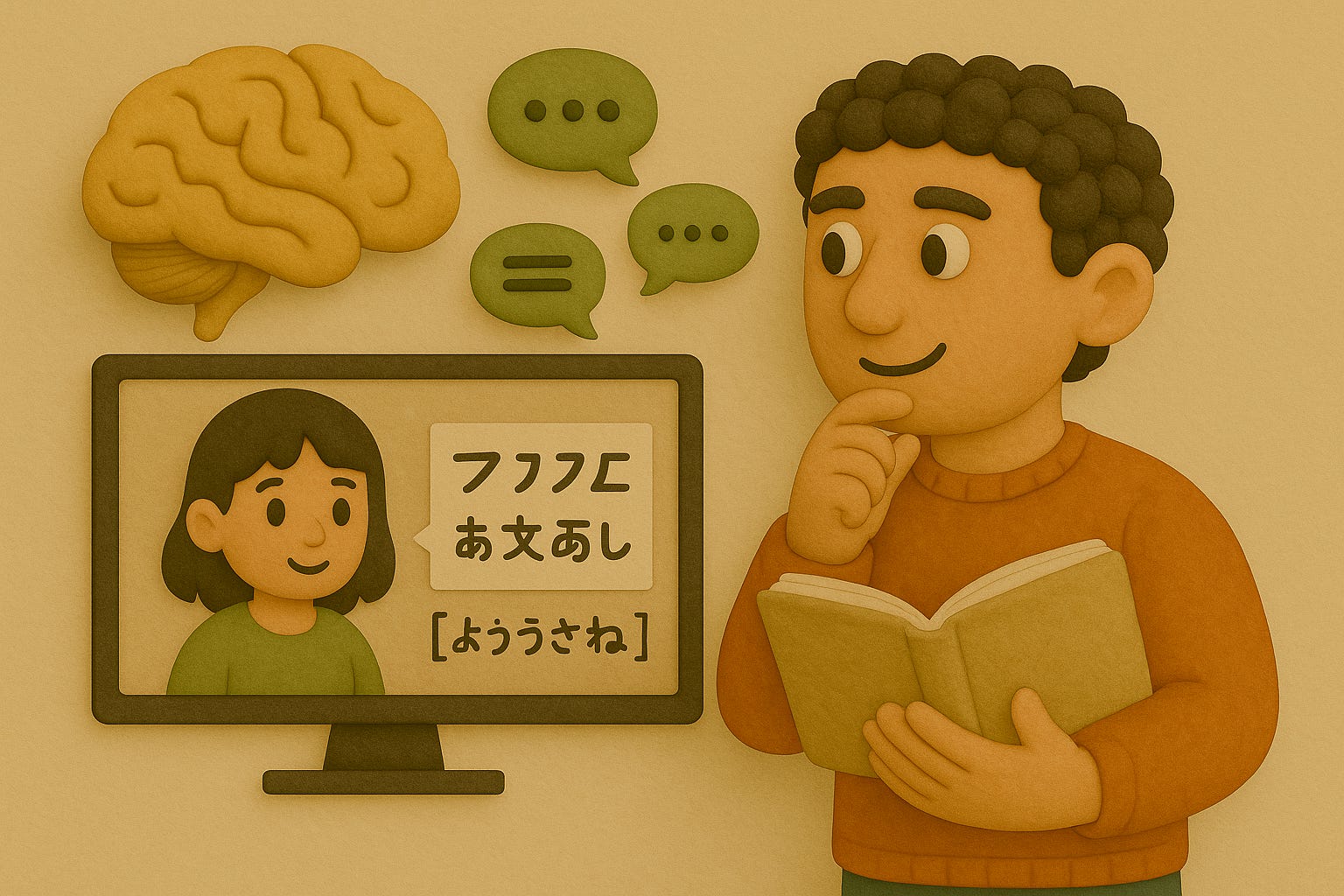
The bottom line
If you want to learn a language 10× faster, stop obsessing over speaking, memorizing, and drilling rules. Those feel productive but move you forward slowly.
Instead, build your entire strategy around this question:
“How can I maximize the amount of comprehensible input I get each day?”
If you do that for six months straight, you’ll experience a strange moment:
You’ll open your mouth… and the language will simply come out.
Not perfectly.
Not fluently.
But naturally.. and shockingly effortlessly.
That’s the power of real language acquisition.
Thanks for reading :)
Until next time.
— Tobi
💡 Question: What has helped you learning a new language?
I like this take. For Spanish, Portuguese, French so much of my input is based on interviews, podcasts, and movies/news in my target languages. Treating them the same way I would English on a daily basis. Besides just relying on Duolingo .
Thank you for taking the time to learn Japanese.
I am still studying English myself, but I truly feel that what you said is exactly right.
Thank you for reminding me of something important.