


Last week, an AI tool completed a task in eleven minutes that would normally have taken me most of an afternoon.
The result was good. Everything worked. I reviewed it, made a few small changes, and caught myself reaching for the laptop lid.
Task finished early. Time saved. Reward collected.
But then a question crossed my mind:
Saved for what?
That afternoon did not go into a bank account. I could not store it and withdraw it next month. The time was simply there, suddenly unoccupied.
And without a clear plan, I probably would have spent part of it scrolling through my phone, checking messages, or doing some other low-value task.
I had treated the recovered time as the reward.
But the recovered time was not the reward. The time freed itself is not the benefit.
This is a trap hidden inside the promise almost every AI product makes:
Save time.
It sounds like the finish line. But I would argue it is only half a sentence.
Saving time matters only when you know what you are saving it for.
You Cannot Actually Save Time
Money can be saved.
You can leave it in an account today and spend it five years from now.
Time does not work like that.
When AI gives you two hours back, those hours immediately begin disappearing. You will spend them whether you make a conscious decision or not.
And without a plan, time usually flows toward whatever requires the least effort:
Scrolling.
Checking emails.
Watching another video.
Doing smaller, easier tasks.
So saving time should never be the final goal.
The real question is:
What will you do with the time AI gives back to you?
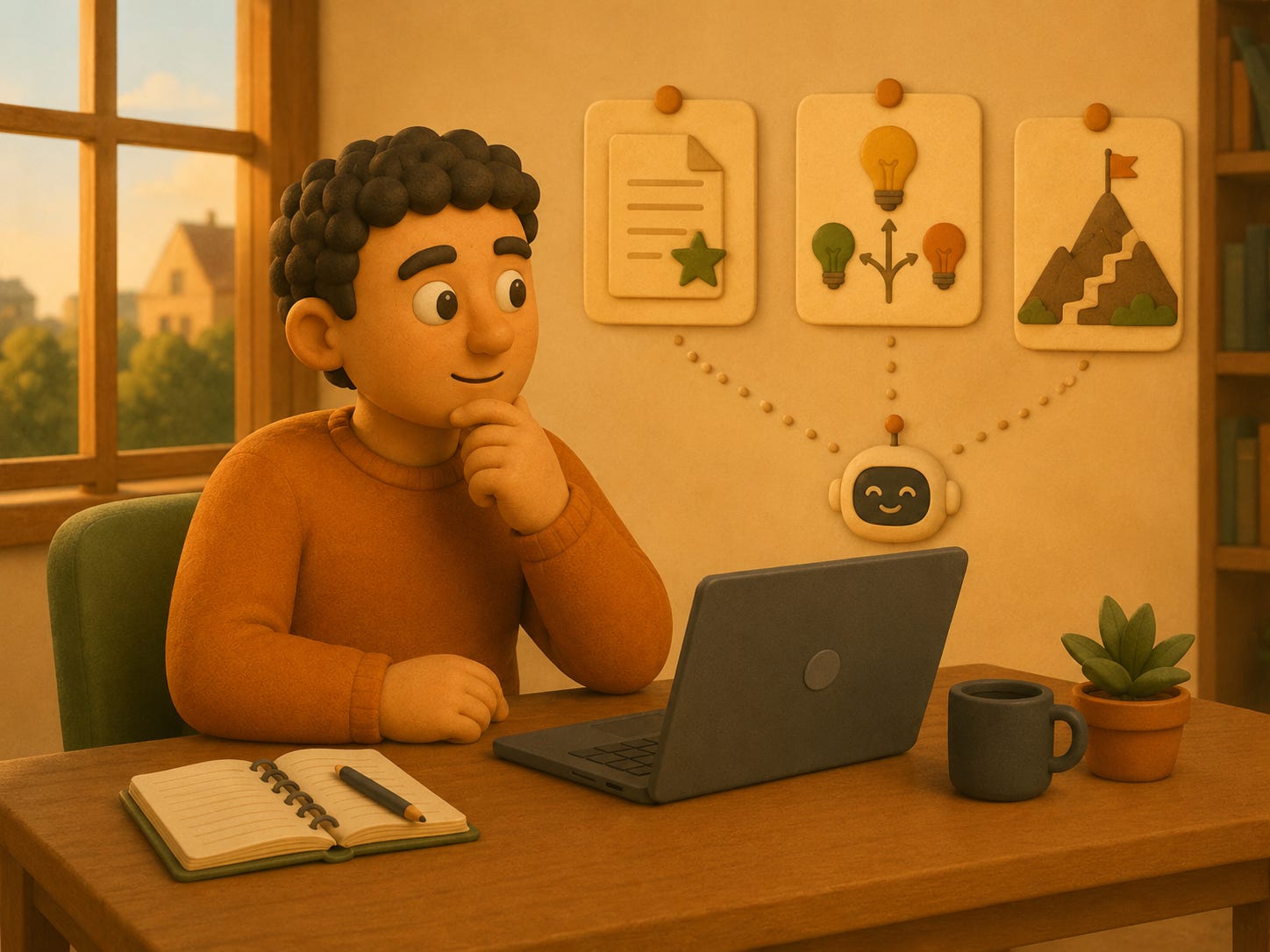
I believe there are three valuable answers:
Improve the quality of your work.
Explore more options before deciding.
Take on a bigger problem.
Do one of these, and AI makes you more capable.
Do none of them, and AI only helps you become unproductive faster.
1. Reinvest the Time Into Quality
The most common way people use AI is simple:
They finish the same work faster and stop as soon as it looks acceptable.
The first draft is readable, so they publish it.
The presentation is complete, so they send it.
The task works, so they move on.
But what if “finished” should no longer be the finish line?
What if it should become the new starting point?
AI can help me write a rough version of a newsletter much faster than before. But that does not mean I should publish the first decent result.
It means I can spend more time strengthening the argument, rewriting weak sections, finding better examples, and removing anything that does not deserve the reader’s attention.
The version AI helps me reach quickly should be the first version I used to begin with, not the version I send.
The same applies to almost any kind of work.
AI can help you prepare a presentation faster. Use the remaining time to make the message clearer.
It can help you write an email. Use the remaining time to make sure the other person will understand it correctly.
It can help you research a topic. Use the remaining time to question the sources and examine what might be missing.
It can help you create a business plan. Use the remaining time to test the assumptions behind it.
There is a large difference between something that looks right and something that actually is right.
That gap is where the saved time should go.
When the work becomes faster, the standard should also rise with it.
If your speed doubles while the quality stays exactly the same, you have not necessarily improved. You have simply finished sooner.
2. Spend the Time Exploring More Options
Before AI, exploring multiple ideas was expensive.
Creating one plan might take hours. Creating three could take an entire day. So most people followed the first reasonable idea they had and called it decisiveness.
You chose the first option because it was the only one you had enough time to explore.
AI changes that.
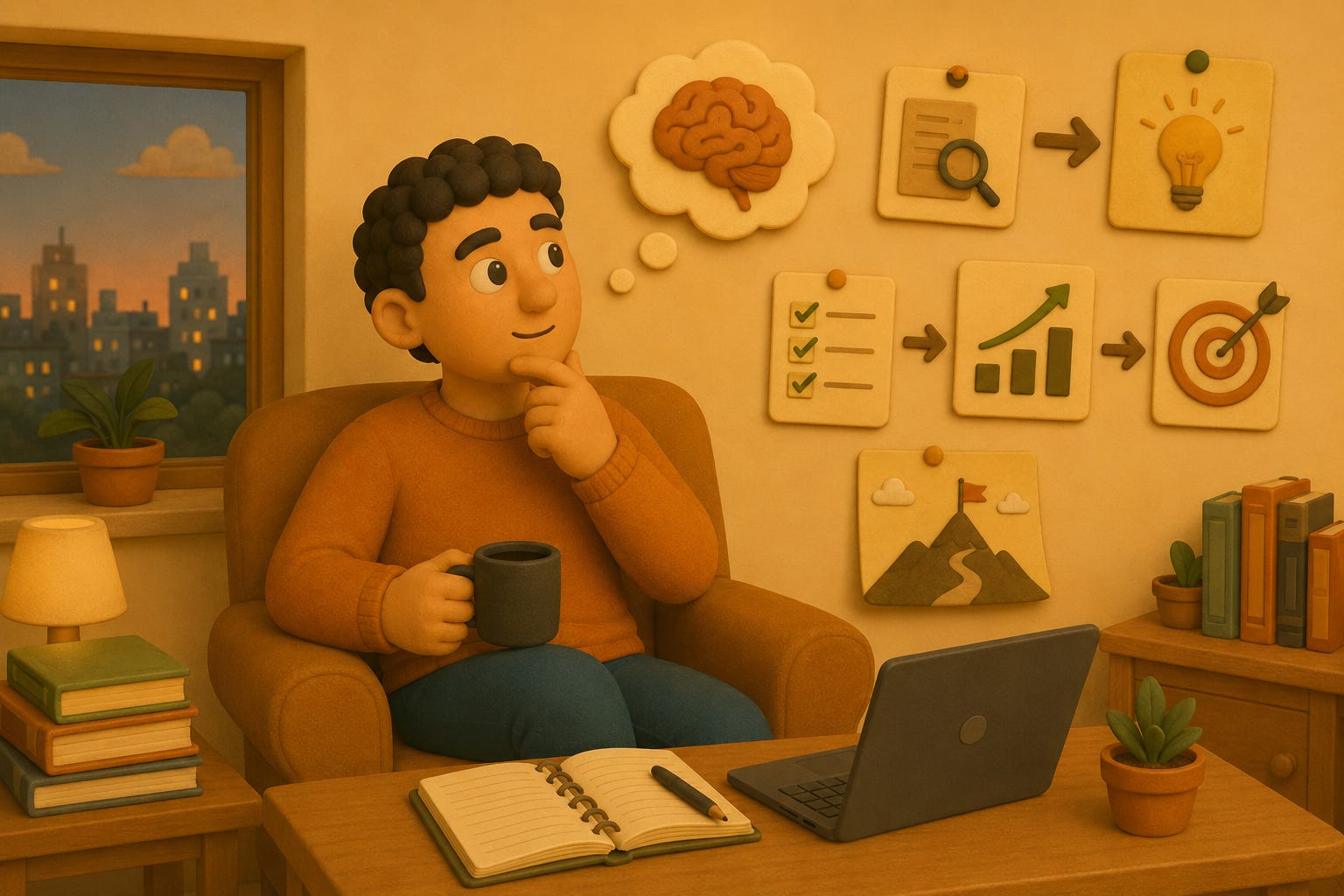
You can now compare several approaches before committing to one.
Instead of asking AI to write one headline, ask for twenty.
Instead of building your business around the first idea that sounds promising, compare five different versions of it.
Instead of accepting the first solution to a problem at work, explore three approaches and examine the strengths and weaknesses of each one.
Instead of writing the first newsletter angle that comes to mind, generate ten angles, reject nine, and develop the strongest one.
This is one of the most underused benefits of AI.
Most people use it to reach their first answer faster.
A better use is to delay the final answer until you have seen more possibilities.
Of course, AI should not make every decision for you.
It can organize the options. It can point out trade-offs. It can help you notice possibilities you may have missed.
But important decisions still require your judgment.
AI can show you different careers. It cannot decide what kind of life you want.
It can compare business ideas. It cannot decide which problem you care enough about to spend years solving.
It can suggest what to write. It cannot decide what you genuinely believe.
3. Use the Time to Take On a Bigger Problem
This is the most valuable option, and probably the least common.
When a task becomes easier, the natural reaction is to do more of the same task.
But the better response is often to move up to a more difficult one.
I actually think you can compare this with training in the gym:
When a weight becomes easy, you do not continue lifting the same weight forever and celebrate how quickly you finished.
You add more weight.
That is how progress works.
The moment your current level becomes comfortable, you increase the challenge.
The same principle applies to work and life.
If AI makes your existing responsibilities easier, perhaps the goal should not be to complete the same responsibilities with less effort forever.
Perhaps the goal should be to attempt something that previously felt too difficult, slow, or expensive.
Start the business you never had time to build.
Learn the skill you kept postponing.
Create the project that once required resources you did not have.
Give more attention to the work that requires judgment, creativity, empathy, and personal experience.
Solve the bigger problem.
This principle has shaped much of my own life.
When I worked in banking, I did not simply try to become faster at the same tasks. I spent evenings and weekends learning software development because it opened the door to more difficult and interesting problems.
When my schedule became more efficient, I did not use every recovered hour for entertainment. I used part of it to combine full-time work, university, writing this newsletter, training, and learning Japanese.
Not every free hour needs to become productive. Rest, relationships, and enjoyment matter.
But there is a difference between choosing to rest and losing time because you never decided what it was for.
The Rule in One Sentence
Stop asking how much time AI saved you.
Ask what you spent that time on.
Did you improve the quality?
Did you explore better options?
Did you take on a more important problem?
Did you deliberately use the time to rest, think, or be with people you care about?
All of these can be valuable.
But if the answer is “nothing,” AI did not really save you anything.
It only shortened the period before the time disappeared somewhere else.
One Thing to Try This Week
The next time AI finishes something faster than expected, do not immediately close the laptop.
Pause and choose one of these:
Quality
Use the recovered time to make the result meaningfully better.
Do not just correct obvious mistakes. Improve the argument, simplify the explanation, check the details, and raise the standard.
Options
Create three alternatives you would not normally have had time to explore.
Compare them before committing to your first idea.
Importance
Move on to a larger problem that previously felt too time-consuming.
Use the new capacity to attempt work that was once out of reach.
The promise of AI is that it will free your time for the things that matter. Which is exactly the motto of this newsletter Output Theory.
The time AI gives you is worth exactly what you put into it.
Put something worthwhile in.
See you next Saturday.
— Tobi
Sometimes I am astounded that I get all of my work done way faster. Almost like I SHOULD be doing something, but now have nothing to do.
And yeah, I feel myself falling into distractions since I can't "leave" my desk during "work time."
Getting better at just working ahead and knocking out other backburner tasks thanks to time "savings" with AI
Thank you for sharing this post. you are right. We need to qualitatively analyse the benefits of AI tool rather than quantitatively. More time needs to be spent in analysing the output and spend time wisely on complex problems.