


People sometimes ask how I manage to have a big schedule and still feel energized all of the time.
The answer isn’t some exotic supplement stack.
It’s sleep.
More specifically: treating sleep like a performance system, not an afterthought.
If you want consistent energy, creativity, and output, sleep isn’t optional. It’s the basis.
Today I’ll break down exactly how I’ve engineered my sleep so I’m rarely tired, even when life is busy.
Why This Matters More Than You Think
Sleep is not just rest.
It’s:
Hormone regulation
Memory consolidation
Emotional processing
Muscle recovery
Cognitive sharpening
You can train hard, eat clean, optimize productivity systems… but if your sleep is chaotic, everything downstream suffers.
And here’s the uncomfortable truth:
Most people don’t have an energy problem.
They have a sleep discipline problem.
Why Most People Stay Tired
Three common mistakes:
Phone in bed.
Caffeine too late.
Inconsistent sleep environment.
Add heavy meals at night, irregular wake times, and random scrolling until midnight, and you’ve created a perfect storm.
Then you blame “work stress.”
Energy is earned the night before.
The Core Principles of Never Feeling Tired
Here’s the framework I use.
Engineer your environment
Remove stimulation before bed
Control temperature and darkness
Respect caffeine
Use a shutdown ritual
Train hard, even when tired
Now let’s unpack each.
Engineer Your Sleep Environment
Your brain runs on cues.
If your bed is associated with scrolling, bright light, and mental stimulation, it will not associate it with sleep.
So I removed the friction.
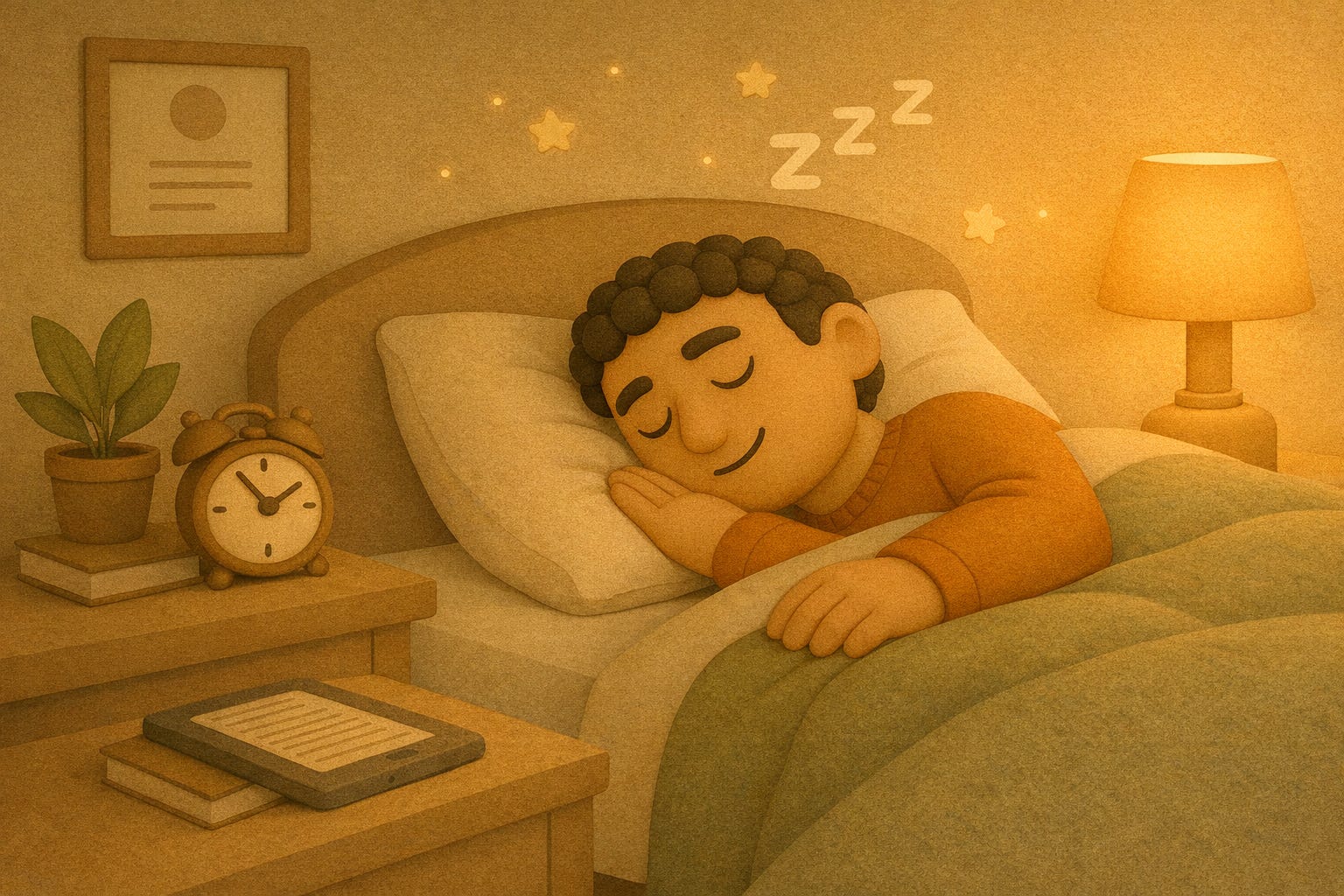
My phone usually stays across the room.
No doom-scrolling in bed.
The only thing on my bedside table is a Kindle.
I read 10–20 minutes. Warm light. No notifications.
Eyes get heavy. I sleep.
That single change eliminated the “lying awake scrolling” problem.
I also try to use a physical alarm clock.
When you have to physically stand up to shut it off, snoozing becomes inconvenient.
Small environmental changes will always beat willpower.
Control Temperature, Darkness, and Noise
This is where most people leave performance on the table.
The ideal sleep temperature for most humans is around 18–19°C.
Your core body temperature drops when you fall asleep. If your room is too warm, your body struggles.
I sleep on an Eight Sleep Pod for precise temperature control. It adjusts throughout the night so I’m never overheating.
When I travel:
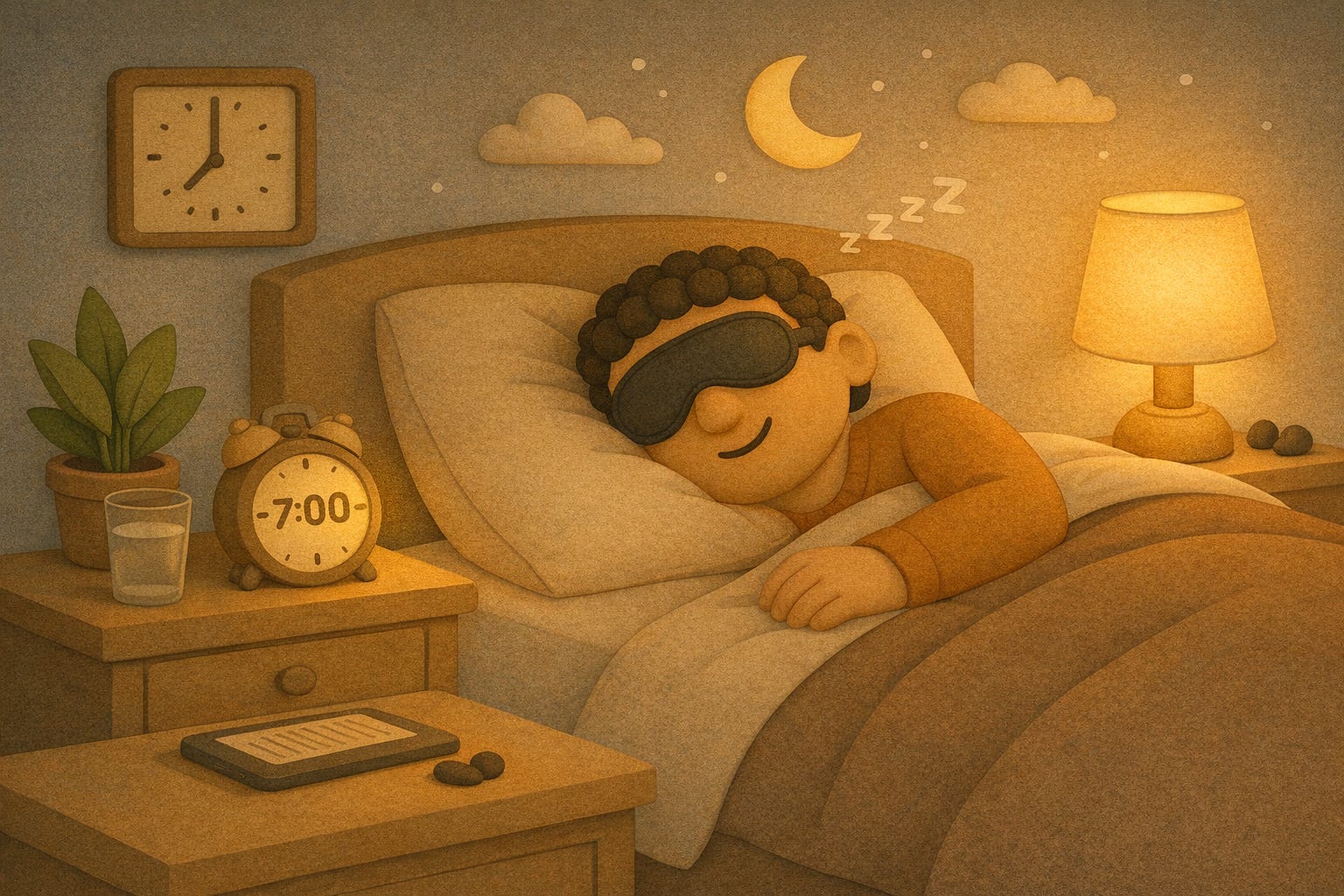
Sleep mask if the room isn’t pitch black.
Ear plugs if there’s noise.
Curtains fully shut.
Darkness is not optional. Even small amounts of light reduce sleep depth.
If you can’t control the hotel environment, you control your tools.
Sleep mask + ear plugs = portable blackout system.
Respect Caffeine (Even If You Think You’re “Fine”)
Caffeine has a half-life of roughly 5–7 hours.
That means your 3 PM coffee is still active at 10 PM.
You may fall asleep, but your sleep quality still suffers.
My rule: no caffeine after 2 PM.
Before that? Fine.
After that? Decaf only.
This single boundary dramatically improves deep sleep consistency.
You don’t notice the damage immediately, but you’ll notice it in long-term fatigue accumulation.
Eat and Live Like Someone Who Wants Good Sleep
You cannot eat garbage and expect great recovery.
I prioritize:
High-protein meals
Whole foods
Stable blood sugar
Minimal ultra-processed junk
And I avoid eating too close to bed.
Large meals right before sleep force your body to digest when it should be recovering.
Light dinner. Protein-focused.
Finish eating at least 2–3 hours before bed when possible.
The Counterintuitive Rule: Push Through
This is important.
Sometimes you will feel tired.
Most people immediately:
Skip the workout
Stop deep work early
“Rest” in unstructured ways
But here’s what I’ve noticed:
If I stay disciplined, train, work and eat clean, even when slightly tired, the following nights improve.
Your body responds to rhythm.
Hard training → deeper sleep.
Focused work → mental fatigue → easier sleep.
Structured days → consistent circadian rhythm.
When you’re dialed in, sleep rewards you.
When you drift, sleep becomes chaotic.
Obviously, this doesn’t mean ignore real exhaustion or illness.
But mild tiredness? That can often be solved by a little bit of discipline and consistency.
The Compounding Effect of Sleep
This is the part most people underestimate.
Sleep compounds.
Good sleep tonight → better training tomorrow.
Better training → better sleep tomorrow night.
Better sleep → sharper thinking → better work.
Better work → reduced stress → better sleep.
It becomes a positive flywheel.
However, the opposite is also true.
One chaotic night turns into:
More caffeine
Worse sleep
More stress
Less discipline
And suddenly you’re “just tired all the time.”
Energy is a system.
What This Actually Looks Like in Practice
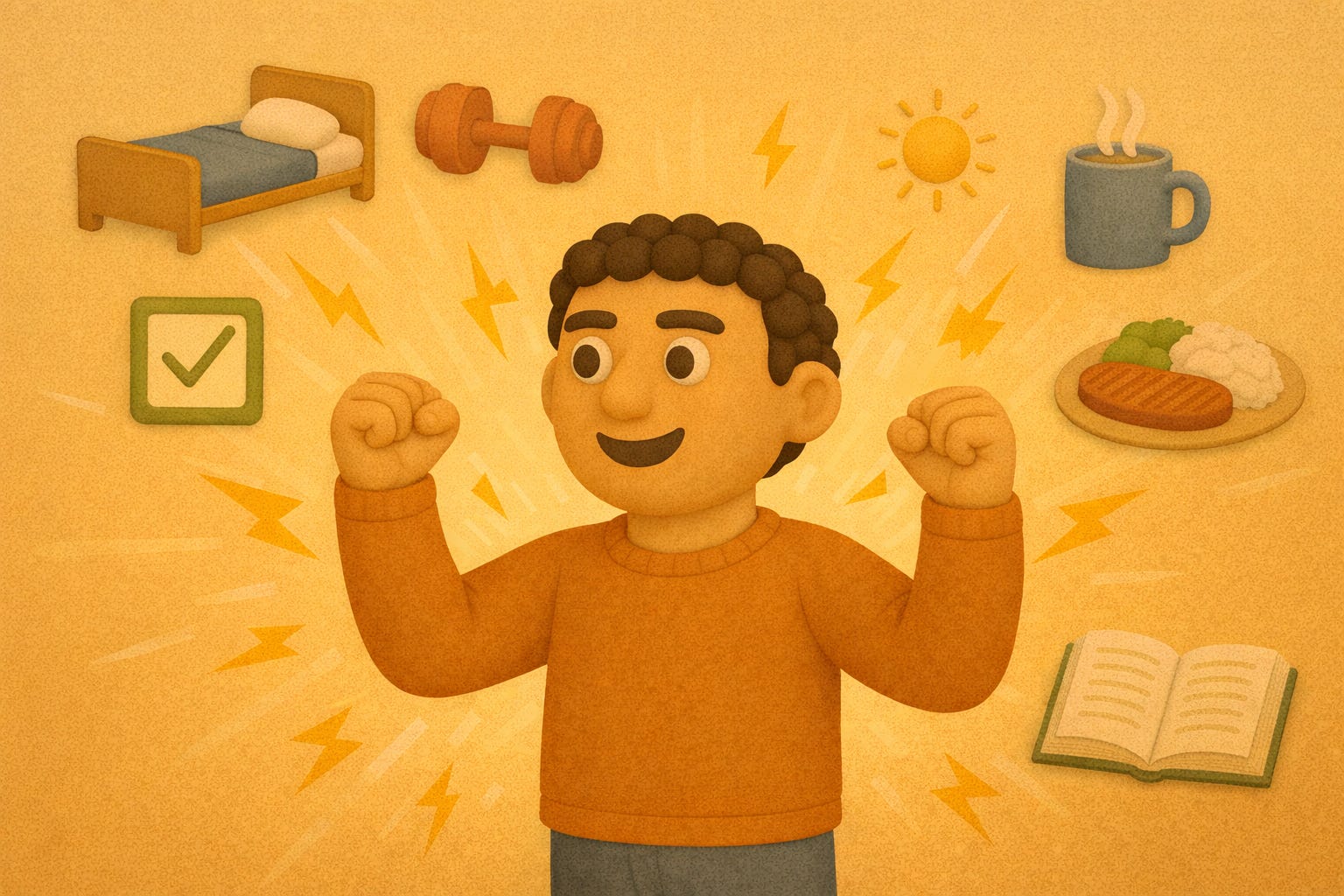
Here’s the minimal version:
Phone outside reach.
Kindle/Book instead of scrolling.
No caffeine after 2 PM.
Cool room (or temperature-controlled setup).
Sleep mask + ear plugs when needed.
Finish eating earlier.
Train even on low-motivation days.
No hacks and no supplements required.
Just consistent inputs.
Sleep Is a Force Multiplier
You want:
Better grades
Better lifts
Better health
Better decisions
Better mood
Better relationships
Start with sleep.
Protect your sleep, and your waking hours will get better automatically.
And once you treat it that way, you stop asking “Why am I so tired?”, but start asking “What system did I break?”.
That’s essentially what Output Theory is about.
Optimize the input.
Multiply the output.
Thanks for reading!
See you next week
— Tobi
I recently started using Loop Dream ear plugs. Totally improved my sleep. ( I have a train nearby). Also all your tips are so great. Here's to sleep!!!!
Yes! Americans shun sleep and brag about living on less than 6 hours. We need it and everything you said is true, especially the smart phone. Also I don't have a TV in the bedroom.